Why a cable robot? You don't need a humanoid to pick up things on the floor. Four motors and high strength lines are all it takes move a gripper around the room, even if you can't even see the floor under all the junk. In robotics, price is basically actuator count, and we belive that the fastest way to solving real home chores is to keep it low and keep it affordable.
Status: Stringman is launched! Current peak functionality is to automatically find targets and carry them to a preset destination. More adanced behabvior is constantly being developed.
| Work area | Room sizes between 2m and 10m (XY diagonal). Room length/height ratio between 0.9 and 2.5 |
|---|---|
| Payload | Up to 2 kg near the floor, 1kg anywhere in the room. |
| Traverse speed | ~0.4 m/s |
| Cameras | 2 anchor cameras @ 1920x1080 30fps and 1 wide FOV gripper camera @ 684x384 60fps |
| Compute | External. (Your PC as controller) Raspberry Pi Zero 2W (gripper) and Pi 3A+ (anchors). |
| Connectivity | 5 GHz Wi-Fi using QR-codes for simple setup. (gripper 2.4 Ghz only) |
| Materials | 3D printed. Structural parts: PET-GF, Decorative parts: PLA |
| Mounting options | Wooden stud backed drywall or plaster wall mounts. Strapping to structural columns. |
| Fitness | ~800h of testing in real homes accumulated so far. |
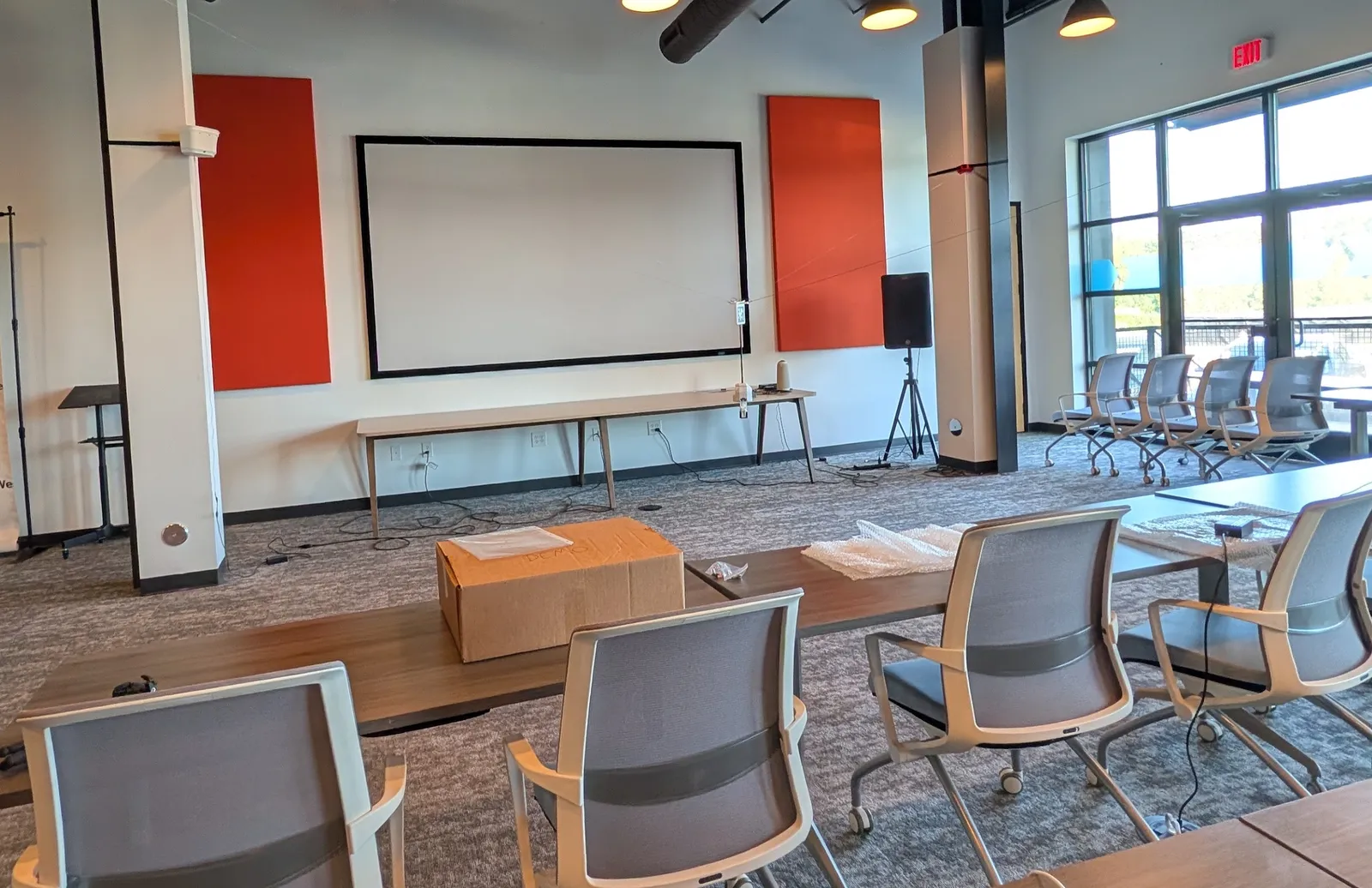
A classroom with a Stringman robot gives your students a chance to become familiar with robotics fundamentals such as inverse kinematics, telemetry, and immitation learning while controlling an exotic and capable flying gripper.
If you have walls and a macbook, you're more than halfway there.
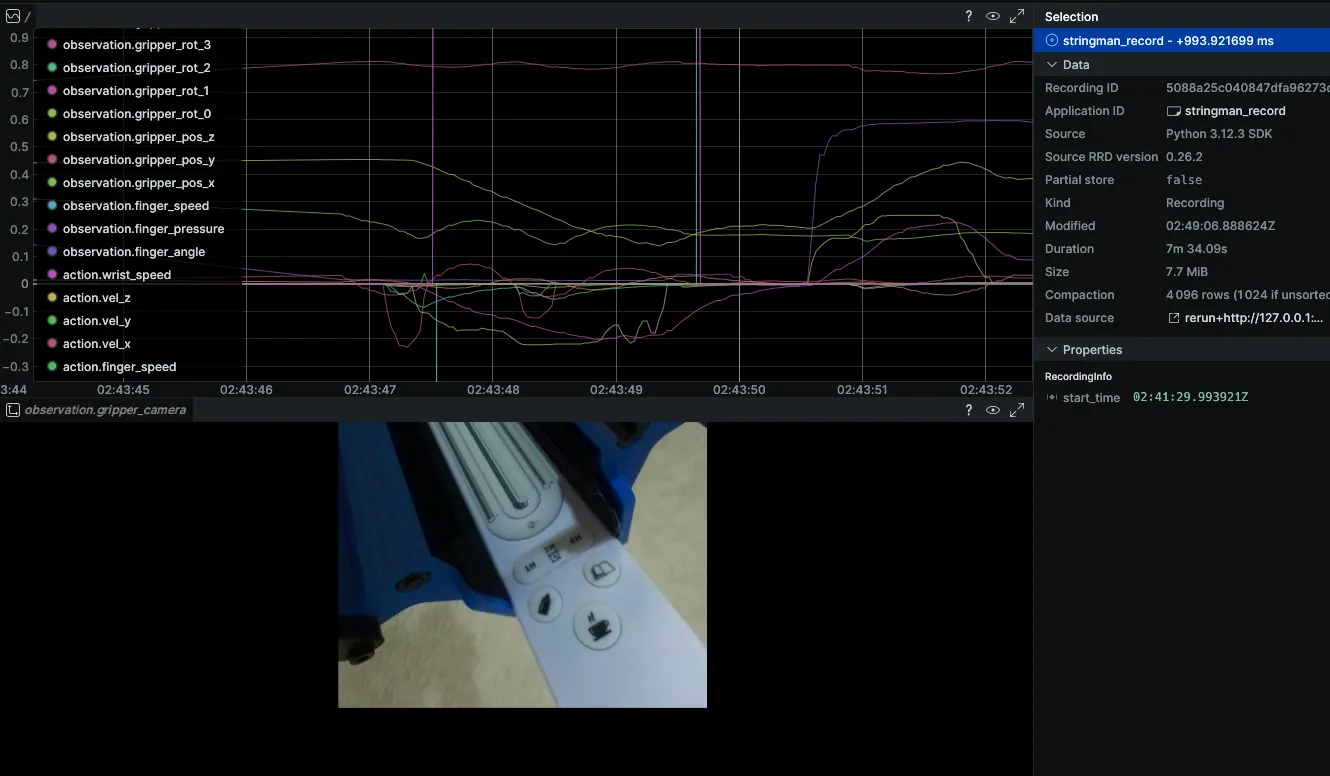
The default modes that control stringman are small and capable, running on as little as 1.5Gb of vram.
And Stringman is also fully capable of running a variety of models from the LeRobot platform, including Pi.05, JEPA, Multitask DiT, and others. We provide a detailed guide inviting you to try training it to grasp objects from your own examples. Robotic Immitation Learning is not as hard as it looks.
No GPU? We have a proven method that allows you to make use of free tier GPU's on Modal and connect them to your robot's remote telemetry.
Unlike desktop arms limited to a fixed radius, Stringman leverages a cable-driven architecture to access the full volume of a room. The work area volume per dollar of this type of robot is completely unmatched, all with fewer actuators than even the simplest mobile robots. Anchors and eylets are mounted in the corners of the room near the ceiling and define a four-sided work area within which any object can be moved from point to point.
| Stringman | Research arm | |
|---|---|---|
| Work area | 7 × 7 × 3 m room (147 m³) |
0.75 m hemisphere (0.88 m³) |
| Price | $965 | $2,500 |
| Volume per $1,000 | 64.8 m³ | 0.35 m³ |
That's roughly 500× the work area volume per dollar, at comparable 2 kg payload.
Organizing your home is a physical process, not a coding task. Use our clip-on fiducial tags to designate your laundry bin, toy box, and trash can. Stringman maps these locations visually. You don't need to tag individual pieces of clutter—just the destination. If there's something you never want it to pick up, you can mark that item as off-limits.
Networks trained to control stringman have learned that the word "toybox" refers to that tag, so you can use it to mark anything even if it doesn't look like the toyboxes from our training set.
You can also use the tags as arbitrary source and destination markers for ferry jobs, such as carrying items from one robot arm to another. or carrying laundry from the ground to a robotic folding station
Stringman's anchors are secured to the studs with a pair of wood screws, similar to a curtain rod. You need step ladder, a cordless drill, and about 1 hour for installation and setup following the detailed picture guides or Video Guide Connecting to your network is a matter of holding wifi sharing QR codes up to stringman's cameras. Calibration is automatic and takes about 4 minutes.
As long as it remains installed, yes. However, when parked, they are up near the ceiling and out of the way. Clutter on the ceiling is preferable to clutter on the floor in our opinion. If you need to remove the anchors, they can be detached from their mounts without tools, leaving a relatively small white part on the wall.
Yes, it's just a matter of mounting the anchors at or below the level of the fan, making it physically impossible for the lines or marker box to touch it. Similarly, the work area can be shrunk to exlcude low hanging light fixures if they are off to the side, but if the center of the room does contain low hanging objects, strinman cannot be installed in that room.
Robotics shouldn't come at the cost of domestic privacy. Stringman supports a fully air-gapped operating mode where all video processing and telemetry remain within your local network. The UI is served locally and AI policies can be run with local hardware as well.
For those who prefer to make the trade-off by binding their robot to an account, our web-based console allows you to monitor and control Stringman from anywhere. Think of it as a security camera with a hand.
If you do decide that you would like to make use of our cloud telemetry relay, You can use it, and still go back to a completely lan only mode whenever you want. Your data is never collected.
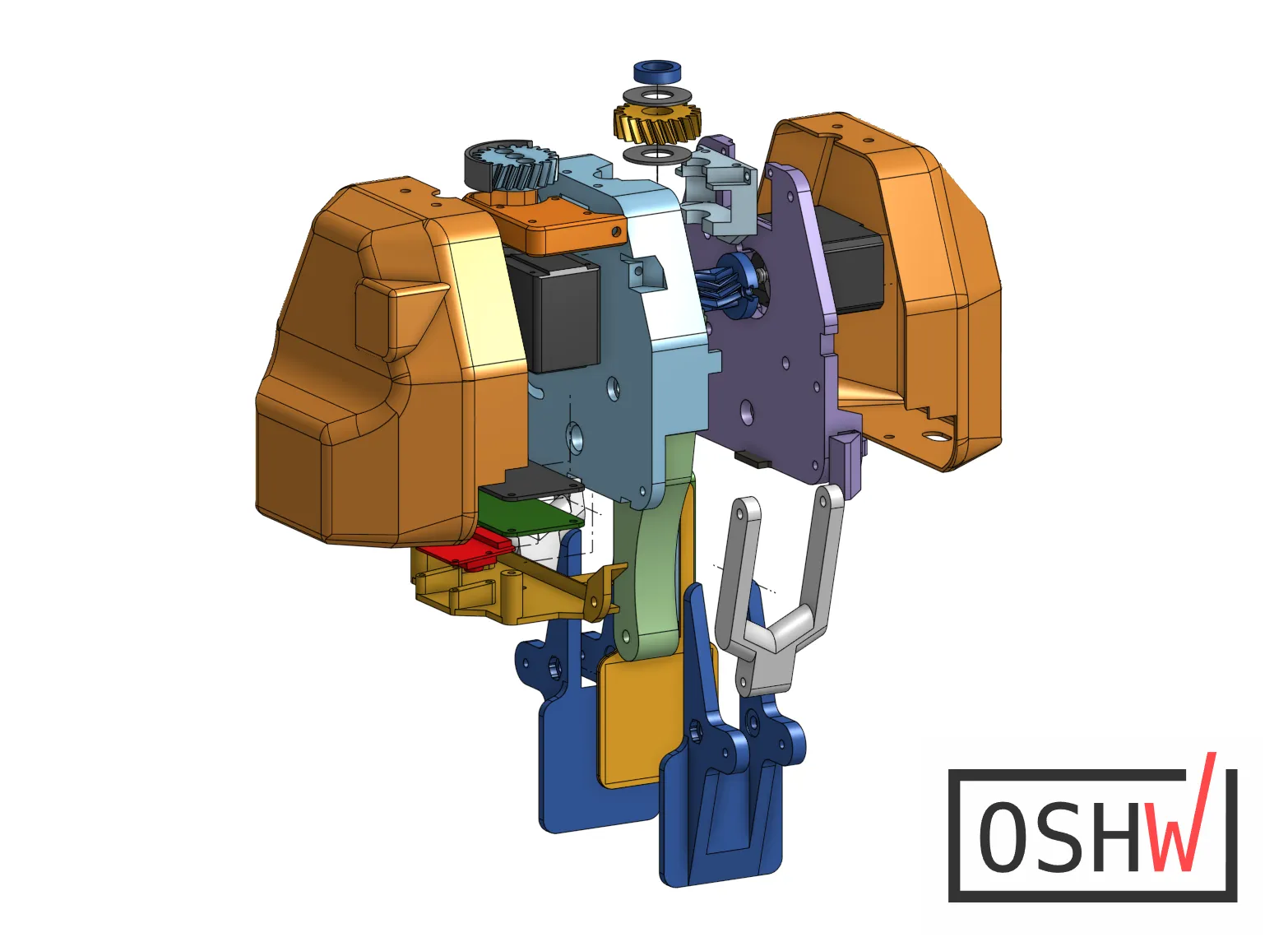
Stringman is proudly based on a stack of open source tools and is Apache 2.0 licensed and OSHWA certified. From the mechanical CAD to the firmware running on the Raspberry Pi nodes, the entire stack is available for audit, modification, and community contribution. Build something useful, and pay it forward.
Start at the build guides to get an idea of whether you'd like to print and build one yourself
Mobile robots spend a significant portion of their time charging. Because Stringman is a powered from the wall, it's always ready for work. Furthermore, by removing the heavy battery pack, we've increased the payload capacity per dollar compared to mobile platforms that must waste energy carrying their own power supply.
The gripper's power is delivered via one of the support cables. A two-conductor FEP jacketed twisted pair cable with a tensile strenght of 50N.
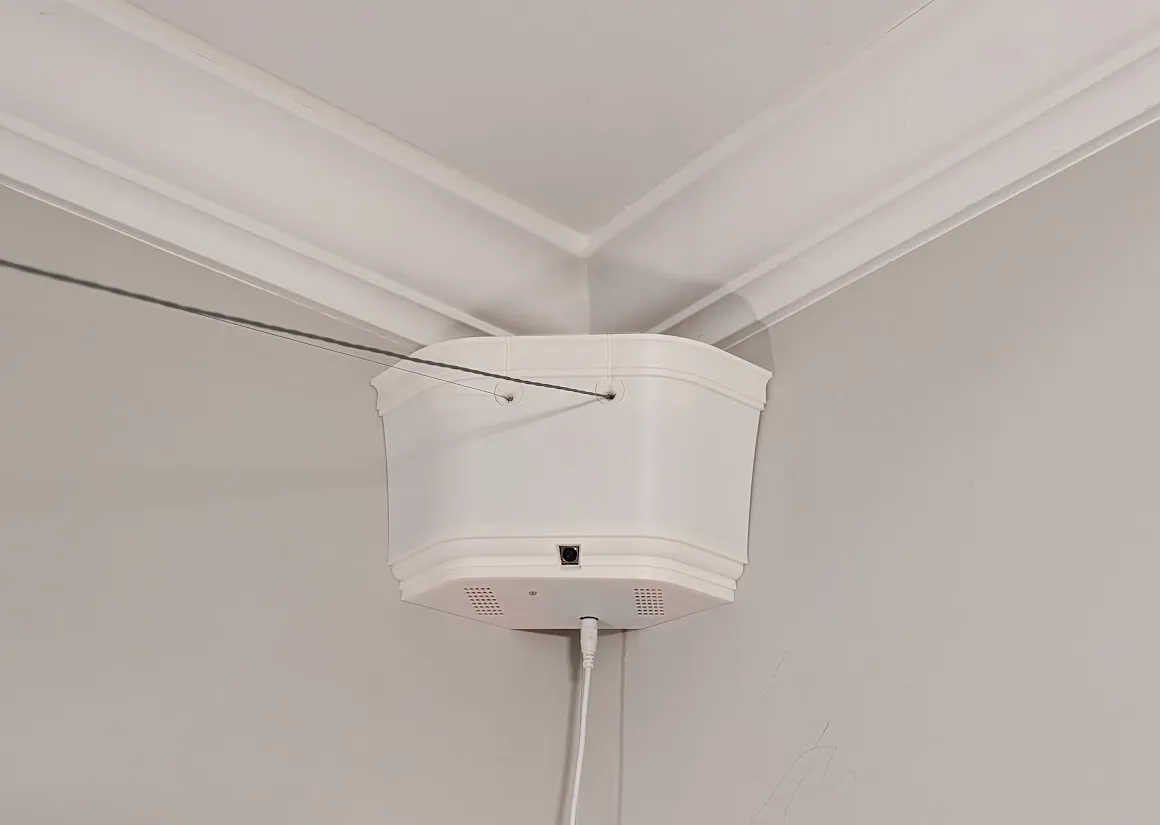
We designed Stringman to work in a home, not a lab. The corner anchors are styled to mimic crown moulding, and the braided lines are nearly invisible at a distance of just a few meters. Aesthetically, we try to blend in and get out of sight.
If you are curious how it would look in your house, you can print and assemble the frame without any motors or electronics, and install it just for looks
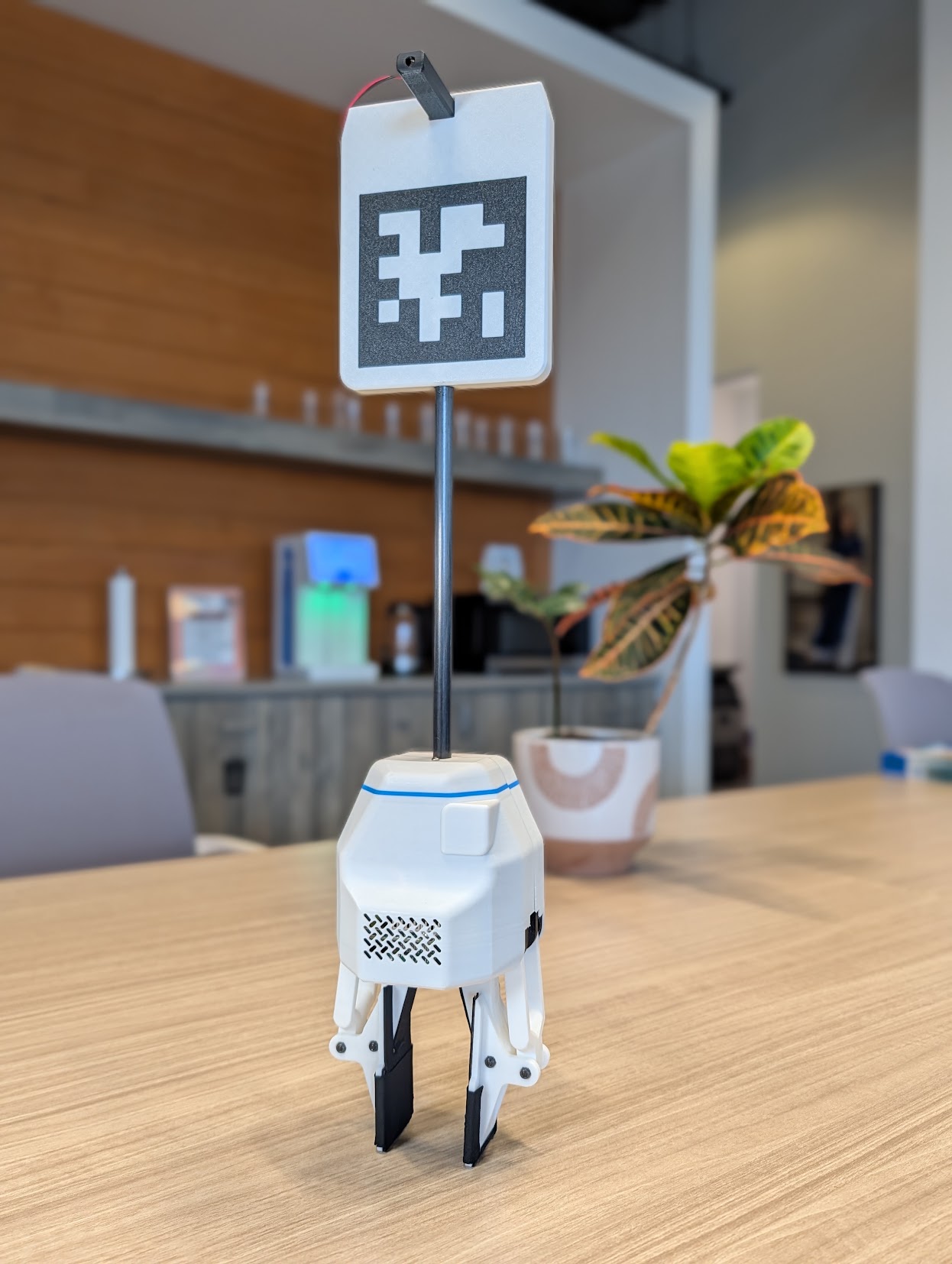
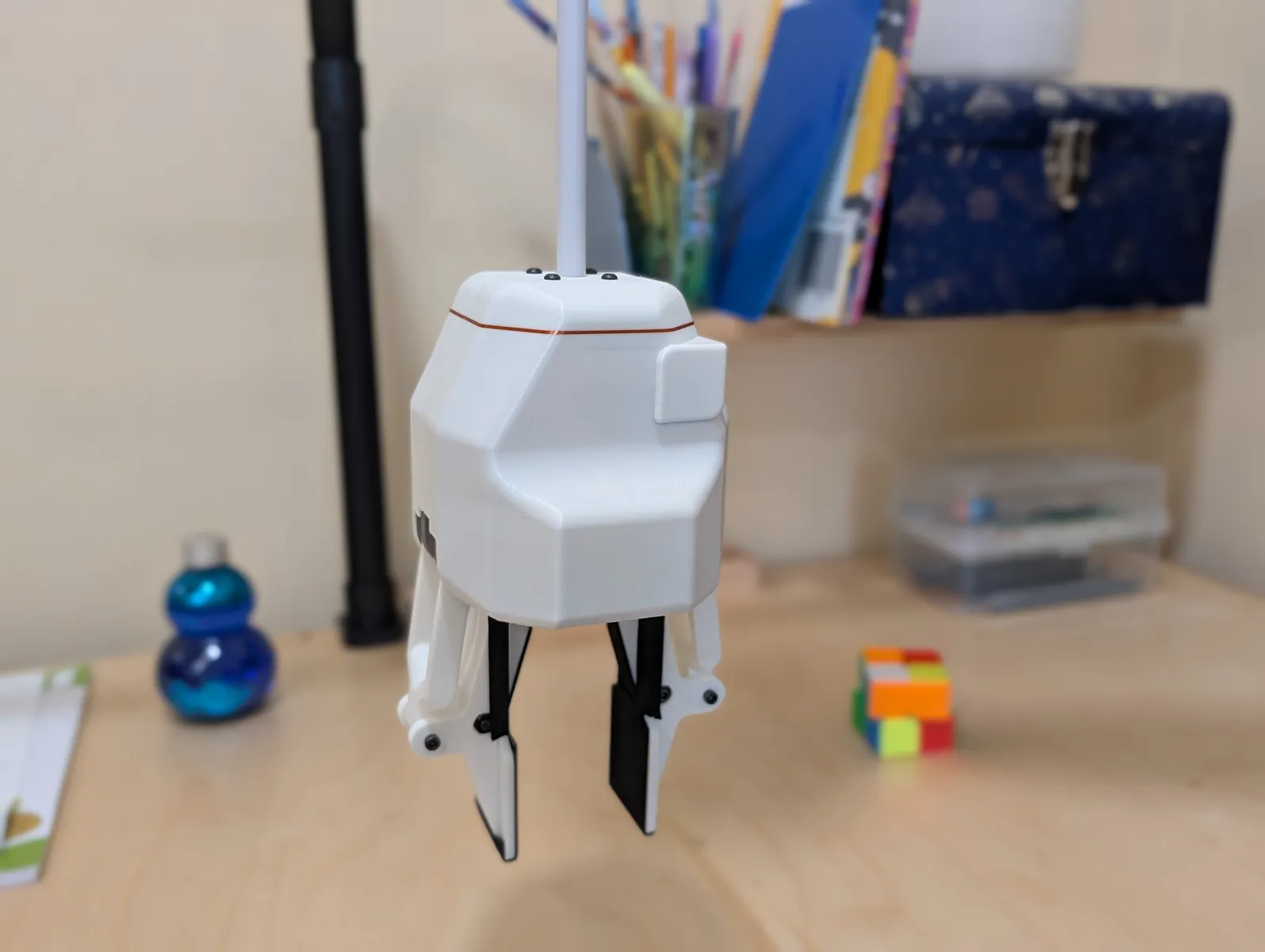
What's that pole for? Stringman's gripper is 50cm below the pivot point so it can reach the floor next to beds and tables. This additional linkage could allow unconstrained motion so Stringman employs active swing cancellation algorithms to counteract momentum, without adding the cost of any additional motors. This ensures the gripper remains steady and predictable even during rapid cross-room traversals.
There's a whole video about swing cancellation if you're curious about how it works!
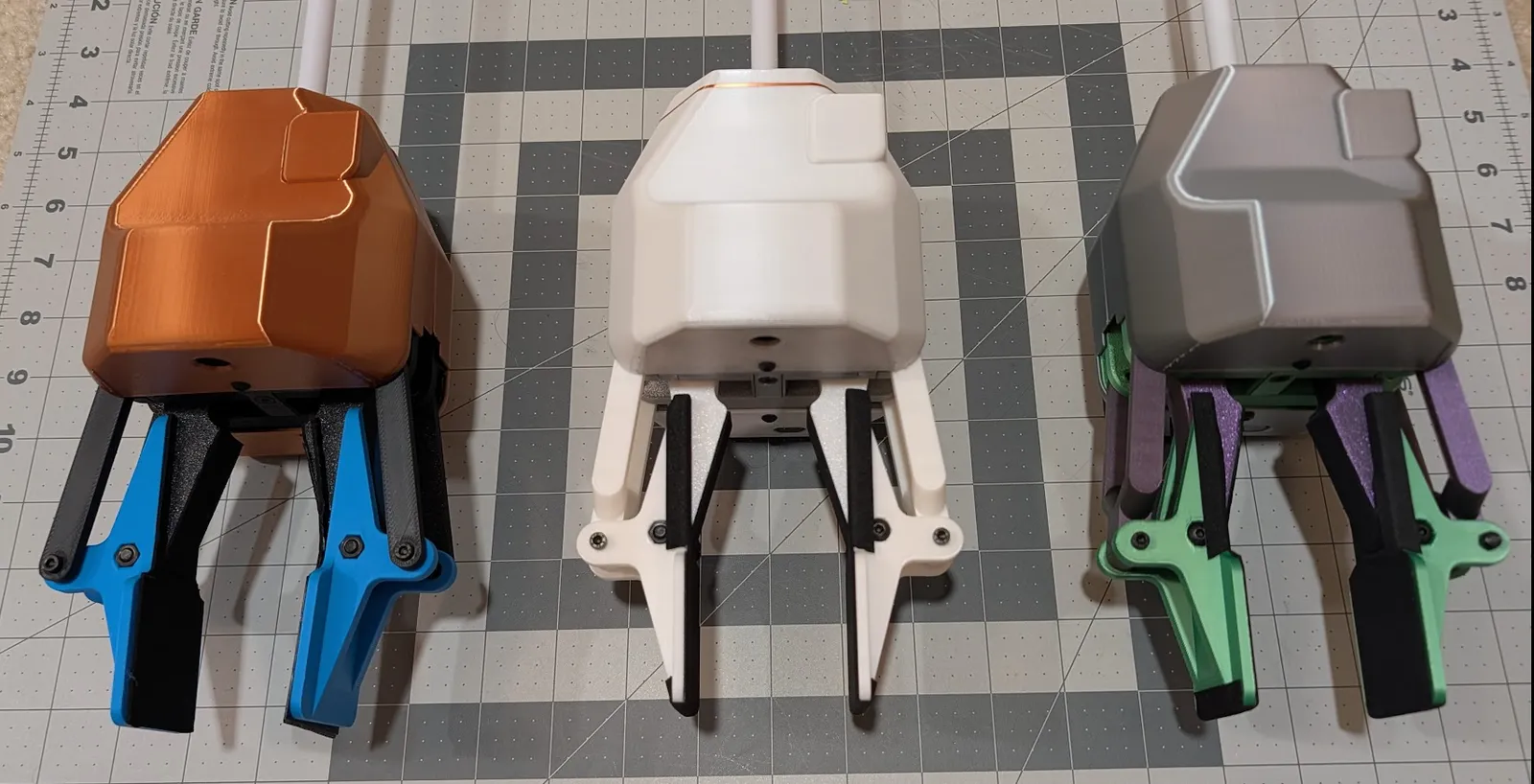
Often, a simple solution that gets the job done has more value than a complex one. Stringman uses a two fingered gripper with a wrist. This is enough dexterity for the clutter it is designed to pick up, keeping weight and cost low and reliability high. In our household tests we have determined that more layers of grip tape is simply a better return on investment than more articulated fingers.
The gripper can rotate it's wrist to better place the fingers around flat sided or long objects.
TThe Stringman faceplate is easily swappable. Grab the STL or bambu 3MF files to print your faceplate in any color.
Join our community for support, live updates, and direct chat with the developer.
Join ServerSubscribe for major product announcements, software updates, and new hardware releases.
SubscribeWatch full demonstrations, tutorials, and deep-dives into Stringman's kinematics and build processes.
Watch VideosExplore the open-source firmware, contribute to the codebase, and report technical issues.
View Code